


Finally Get Through a Full Day
on Your Feet.
Without Relying on Temporary
Relief
Without endless stretching. Without temporary fixes. Without pain slowing you down.
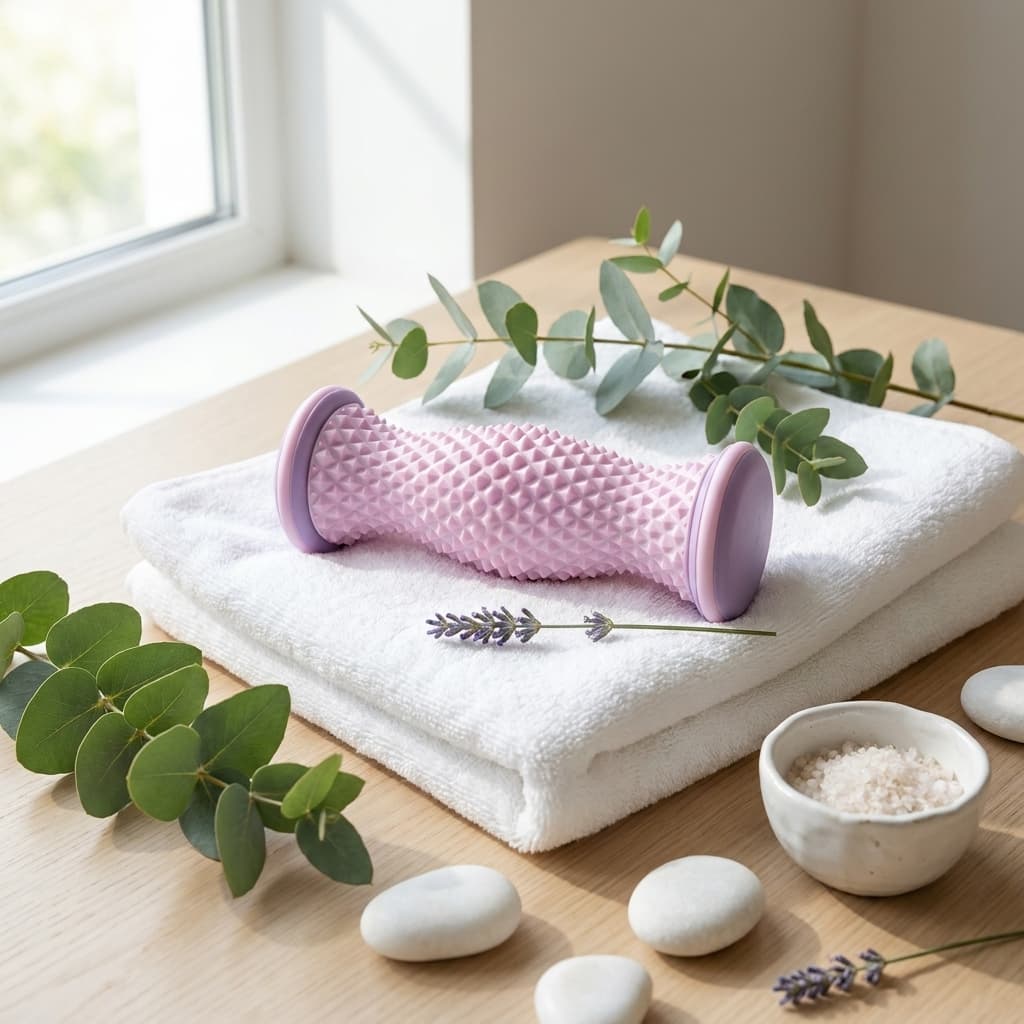
The GlowLift Fascia Roller
The GlowLift Fascia Roller
The GlowLift Fascia Roller
Order today to avoid the wait on the next batch.
Couldn't load pickup availability


The Questions You're Already Asking
Do I need to stop running or exercising while using it?
Do I need to stop running or exercising while using it?
Not necessarily. The GlowLift™ ArchRoller is designed to fit easily into your existing routine. Many customers use it before a run to loosen tight tissue or afterwards to help massage tired feet. If you're experiencing severe pain, it's always best to follow advice from your healthcare professional.
How is this different from a normal foot roller?
How is this different from a normal foot roller?
Unlike traditional straight rollers, the GlowLift™ ArchRoller features an ergonomic hourglass shape that follows the natural curve of your arch. Combined with 52 precision massage nodes, it provides more even contact across the plantar fascia instead of concentrating pressure in a single spot, making massage feel both more comfortable and more effective.
How long should I use it each day?
How long should I use it each day?
Most people use the ArchRoller for around 5–10 minutes per foot, once or twice a day. Consistency is more important than long sessions, making it easy to fit into your morning routine, after work, or following exercise.
Will this help with plantar fasciitis?
Will this help with plantar fasciitis?
The GlowLift™ ArchRoller is designed to massage the plantar fascia and surrounding muscles, helping to relieve tightness and improve foot mobility. While no product can guarantee results for everyone, many people with plantar fasciitis use massage rollers as part of their recovery routine alongside stretching and other recommended treatments.
What if it doesn't work for me?
What if it doesn't work for me?
We're confident you'll love your GlowLift™ ArchRoller. That's why every order is backed by our 30-Day Money-Back Guarantee. If you're not completely satisfied, simply contact our support team within 30 days of receiving your order and we'll help make it right.
Not All Foot Rollers Are Created Equal
Most foot rollers are simply straight cylinders with raised bumps. GlowLift™ was engineered around the natural shape of your arch to deliver a more targeted, comfortable and effective massage experience.

Designed Around How Your Foot Actually Works
Engineered with an ergonomic hourglass profile and 52 precision massage nodes to target the calf and arch where tension builds — delivering a more comfortable, controlled massage that works with your foot, not against it.

One Shape Doesn't Fit Every Arch
Most traditional foot rollers use a simple straight cylinder. While they can massage the foot, they aren't shaped to follow the natural contour of your arch — which means less control over where the pressure lands.
Experience The Difference Yourself
Every detail of the GlowLift™ ArchRoller was designed to work with the natural shape of your foot. From its ergonomic hourglass profile to its 52 massage nodes, it delivers a more targeted, comfortable experience — so you can use it as part of your daily routine with confidence.
SHOP GLOWLIFT™Understanding Your Foot Pain
Plantar fasciitis isn't simply about inflammation. Modern research suggests it's usually a load-related condition, which is why conservative treatments often work best when they're used together rather than relying on a single solution.
What Is Plantar Fasciitis?
Your plantar fascia is a thick band of connective tissue running from your heel to your toes. It helps support your arch while absorbing the forces created every time you stand, walk or run.
When this tissue experiences repeated mechanical stress over time, it can become painful and sensitive—especially near where it attaches to the heel. Current research increasingly describes plantar fasciitis as a load-related condition (fasciopathy) rather than simply inflammation.
Why Is The First Step So Painful?
One of the hallmark symptoms of plantar fasciitis is sharp heel pain during the first few steps after getting out of bed or after sitting for a long period.
A widely accepted biomechanical explanation is that, during periods of rest, the plantar fascia and surrounding tissues become temporarily stiffer. When you suddenly stand up, those first few steps place load back through a sensitive area that hasn't been moving for hours.
As you continue walking, the discomfort often begins to ease before returning later in the day after prolonged standing or activity.
Why Conservative Treatments Often Work Together
Rather than relying on a single solution, clinical guidelines commonly recommend a combination of conservative treatments based on your symptoms.
Stretching is consistently recommended to improve flexibility in the calf muscles and plantar fascia — particularly before your first steps of the morning.
Night splints help keep the foot in a gently stretched position overnight, aiming to reduce the shortening that contributes to painful first steps.
Self-massage can provide short-term comfort and help release tension in the calf and arch. The key is technique: gentle pressure on the arch and calf muscles is useful. Sustained, aggressive pressure directly on the heel attachment can cause micro-tears in already-sensitised tissue and set recovery back. Short sessions, light pressure, away from the heel.
What This Means For Your Recovery
There isn't a single solution that works for everyone with plantar fasciitis. That's why healthcare professionals often recommend a combination of conservative treatments rather than relying on just one approach.
The GlowLift™ ArchRoller is designed to complement your routine by providing targeted self-massage to the calf and arch. Combined with stretching, appropriate footwear, strengthening exercises and — where recommended — a night splint, it can become part of a consistent daily recovery routine.
One thing worth knowing: the plantar fascia responds well to gentle, controlled load. It does not respond well to aggressive direct pressure, particularly during a flare-up. Short sessions, light to moderate pressure on the arch and calf, and checking how your first steps feel the next morning — that is the method.
How to use it without setting yourself back
The roller works. Used correctly, it is one of the most effective tools in your recovery. Used incorrectly, it is one of the most common reasons people make things worse. Here is the difference.
- Roll the calf and lower leg — this is where it does the most good
- Roll the arch gently, using light pressure only
- Keep sessions to 2–3 minutes per area
- Use it in the evening, after your day's activity
- Stop if it feels more than mildly uncomfortable
- Direct, sustained pressure on the heel attachment
- Rolling for longer than 5 minutes on one area
- Using it first thing in the morning before tissue is warm
- Aggressive pressure because it "feels like it's working"
- Using it during a flare-up or when pain is above 4/10
Why this matters
Aggressive direct massage on an already-irritated plantar fascia can cause micro-tears in the tissue. It feels productive in the moment — the same way pressing on a bruise feels oddly satisfying — but it sets healing back. The rule is simple: if your first steps feel worse the next morning, you applied too much pressure for too long.
Where to roll
Calf & lower leg
Best area. Releases the tight calf that is driving your heel pain.
The arch
Light pressure only. Short sessions. Move slowly.
The heel itself
Avoid direct sustained pressure at the heel attachment.
The morning check-in rule
The morning after using the roller, rate your first-step pain. If it is the same or lower — you got it right. If it is clearly higher — the pressure was too much, the session too long, or you rolled too close to the heel. Ease off next time. Your morning pain is the most honest feedback you will get.