


Night Splint for Plantar Fasciitis Relief
Night Splint for Plantar Fasciitis Relief
Night Splint for Plantar Fasciitis Relief
Free UK shipping · delivered within 14 days
Couldn't load pickup availability


Testimonials
-

I stopped dreading getting out of bed.
I had been hobbling to the bathroom every single morning for eight months. My husband started asking if I was okay before I even spoke. Three weeks wearing this consistently and the first step just felt normal. I actually stood up yesterday and walked to the kitchen without thinking about it once. That has not happened since last year.
-

I ran parkrun on Saturday for the first time in a year.
I am not saying the splint alone did it. I stretched, I strengthened, I did everything. But I had been doing all of that for six months before this and going nowhere. Two months of wearing it every night and I am back out there. 5k on Saturday. Slow. Did not care. Just ran.
-

I was about to book a cortisone shot. Glad I tried this first.
Twelve months of physio, two pairs of orthotics, one round of shockwave therapy. I had the podiatrist's number pulled up on my phone to book the injection. My daughter sent me this. I was skeptical honestly. Six weeks later I cancelled the appointment. The morning pain is about 80 percent gone. I will take 80 percent after a year of nothing.


The Future Is Pain‑Free Mornings
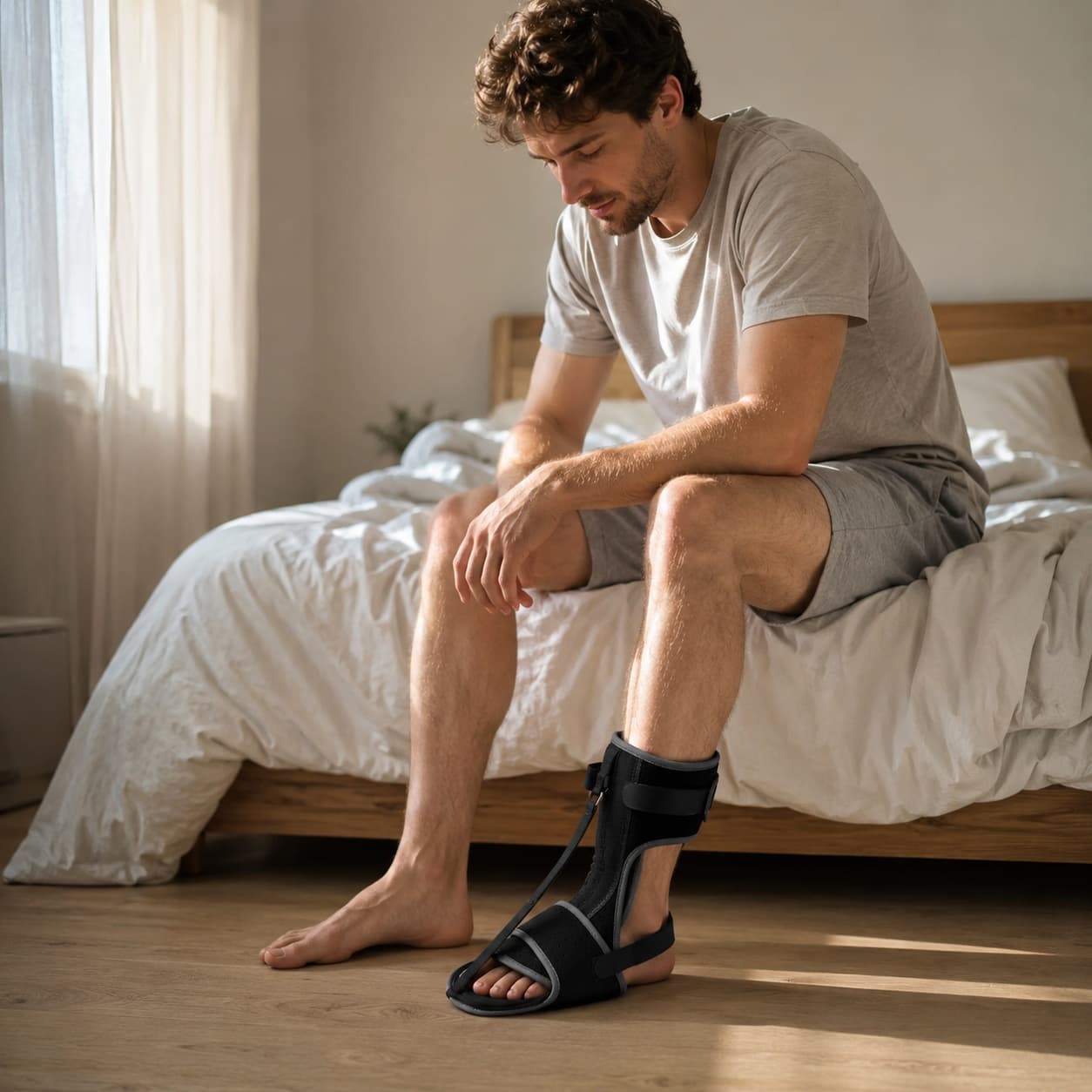
Worn through the night, the splint holds your foot at the right angle so the tissue repairs in a lengthened position. That is why the first step feels different.
* Results according to clinical and consumer studies on night splint use.
CLAIM OFFERWhat Makes GlowLift So Different?
Most plantar fasciitis treatments work on the hours you are awake. The damage happens while you sleep. GlowLift is built to do the one thing that actually matters: hold your foot in the right position all night, every night.
| GlowLift | Others | |
|---|---|---|
| Works While You Sleep | ✓ | ✗ |
| Holds Foot at 85°–90° | ✓ | ✗ |
| Targets the Root Cause | ✓ | ✗ |
| Low Profile & Breathable | ✓ | ✗ |
| Stays On All Night | ✓ | ✗ |
| No Pills or Injections | ✓ | ✗ |
| Costs £££ | ✗ | ✓ |

Why the position you sleep in changes everything.
Most treatments work on the hours you are awake. That is why most treatments fail.
When you stretch in the morning you are lengthening tissue that just spent eight hours contracting. When you ice in the evening you are reducing inflammation in tissue that is about to spend eight hours healing in the wrong position. The effort is real. The timing is off.
The plantar fascia heals through collagen remodelling. New collagen fibres lay down along lines of tension. If the foot is relaxed and dropped during sleep, the fibres lay down along a shortened angle. The next morning when you load the foot that shortened tissue tears again at the heel attachment. That tearing is the pain. It happens every morning because the tissue repaired overnight in exactly the position that causes the problem.
The splint changes one thing. It holds the foot at 85 to 90 degrees while you sleep. The fascia stays gently lengthened. Collagen lays down along the correct alignment. The tissue wakes up extended rather than contracted. The first step lands on tissue that has actually been repairing correctly.
This is not a new idea. Dorsal night splints have been used in clinical settings for decades. The reason most people abandon them is compliance. Rigid boot splints are bulky, hot, and disruptive to sleep. If you cannot wear it you cannot heal.
The dorsal design solves that. Low profile. Breathable. Adjustable tension. Built to stay on through the night rather than end up on the floor by 2am.
That is the only thing that matters. Consistent wear. Correct position. Every night.
Why Everything Else Has Only Ever Bought You Time
The Questions You're Already Asking
I've tried a night splint before and couldn't sleep in it. How is this different?
I've tried a night splint before and couldn't sleep in it. How is this different?
Most people who have tried night splints used the rigid posterior boot style. They are bulky, hot, and physically stop you moving in bed. The dorsal design sits along the top of the foot instead of encasing the whole ankle. It is lower profile, breathable, and lets you shift position through the night. Most people who abandoned a boot splint find this one stays on.
I've been dealing with this for over a year and tried everything. Is it too late for this to help?
I've been dealing with this for over a year and tried everything. Is it too late for this to help?
No. The mechanism the splint works on is not time dependent. Whether you have had plantar fasciitis for three months or three years, the fascia is still shortening overnight and still tearing on first load every morning. The splint interrupts that cycle regardless of how long it has been running.
Do I need to stop running while I use it?
Do I need to stop running while I use it?
That depends on your pain level and how recently it flared. Many people wear the splint at night and continue modified activity during the day. The splint works during sleep so it does not conflict with daytime movement. If you are in an acute flare, reducing load temporarily while wearing the splint nightly gives the tissue the best environment to repair.
I've spent a lot on treatments that did nothing. Why would this be different?
I've spent a lot on treatments that did nothing. Why would this be different?
Because it works on a different part of the problem. Stretches, orthotics, and injections all address what happens while you are awake and loading the foot. The splint addresses what happens during the eight hours your body is trying to repair itself. Most people who see no progress with everything else have simply never controlled the overnight position. That is the gap this fills.
Do you ship outside the UK?
Do you ship outside the UK?
We currently ship across the UK with free delivery on all orders. International shipping is coming soon.
